
Guide chart
| Type of wine | Serving temperature |
|---|---|
| Champagne, cava and sparkling wines | 6–8 °C |
| Young, aromatic whites (Albariño, Riesling, Gewürztraminer) | 7–10 °C |
| Aged or age-worthy whites (single-plot Godello, white Burgundy) | 10–12 °C |
| Rosés | 8–10 °C |
| Young, fruity reds | 12–14 °C |
| Aged reds (Rioja, Ribera del Duero) | 15–17 °C |
| Big, structured reds | 16–18 °C |
These are the usual ranges on winery and shop fact sheets; many bottles give their own on the back label.
Three rules I follow
- Better a little cold than warm. In the glass the wine warms up straight away; the other way round there’s no quick fix.
- “Room temperature” doesn’t mean 24 °C. The expression comes from cold houses and cellars. A red in a living room in summer is too warm: a few minutes in the fridge or in a bucket of water sorts it out.
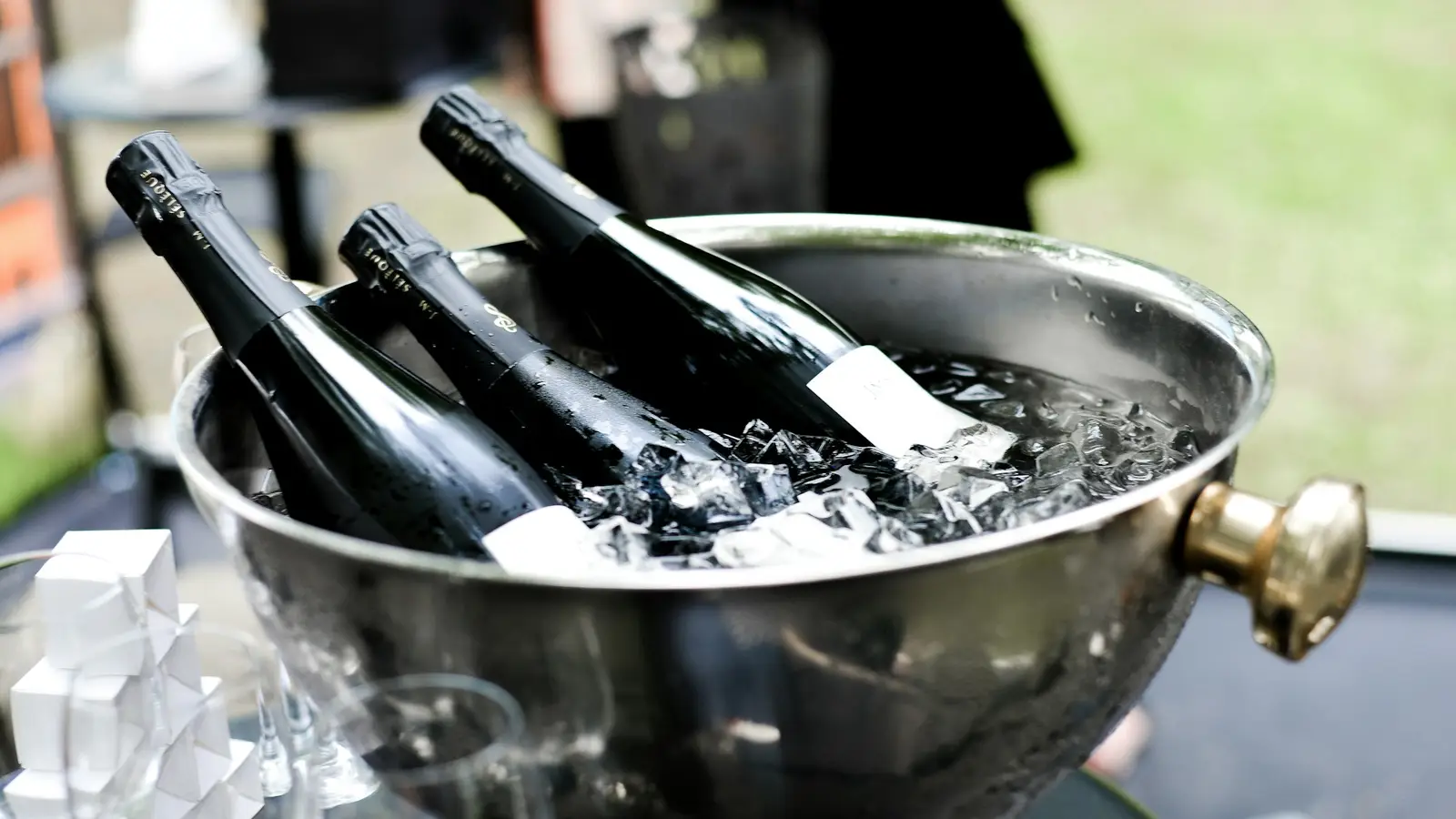
- To chill quickly, water and ice. An ice bucket with water, ice and a handful of salt chills much faster than the fridge. The freezer, only with an alarm: a forgotten bottle can break.
Storing isn’t serving
A wine fridge for long-term storage works at a different temperature (around 12 °C, stable). If you have a two-zone wine fridge, you can keep one zone at storage temperature and the other at serving temperature.


