How to choose
Temperature is wine’s invisible accessory. A red that’s too warm seems alcoholic and heavy; an ice-cold white smells of nothing. The good news: getting it right is easy.
What temperature to serve each wine at
| Wine | Serving temperature |
|---|
| Cava, Champagne and sparkling wines | 6–8 ºC (long-aged ones, 8–10 ºC) |
| Young whites and rosés | 8–10 ºC |
| Barrel-aged whites | 10–12 ºC |
| Young, light reds | 12–14 ºC |
| Aged reds | 15–17 ºC |
| Fortified: fino and manzanilla | 6–8 ºC |
Rule of thumb: serve it a touch colder than ideal. In the glass and in your hand, wine warms up a couple of degrees in no time.
How to chill a bottle properly
- Fridge: about 2–3 hours for a white, 3–4 for a sparkling wine. A red sitting at 22 ºC appreciates 20–30 minutes.
- Ice bucket with ice and water (and a pinch of salt): the quickest way, about 15–20 minutes. Ice alone isn’t enough: it’s the water that touches all the glass.
- Freezer: 20 minutes at most, with an alarm. Forgetting about it ends in a popped cork or frozen wine.
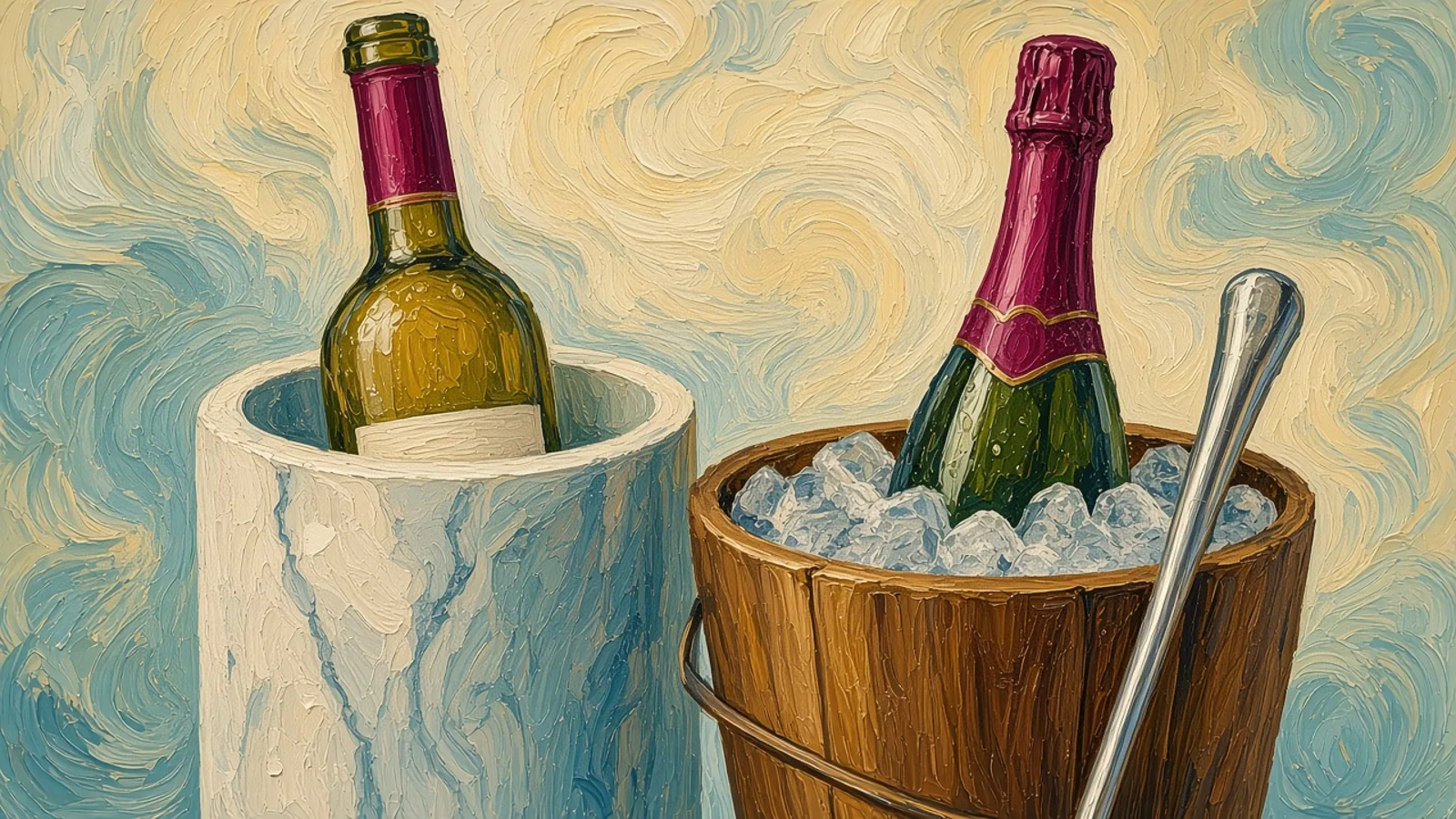
- At the table: a marble cooler or a steel chilling stick keep an already chilled bottle cold, but they don’t chill it from room temperature.
Which type of cooler to choose
- Chilling stick: discreet and drip-free; ideal for long lunches and terraces.
- Marble: you keep it in the fridge and it holds the cold very elegantly. Check the diameter of your bottles.
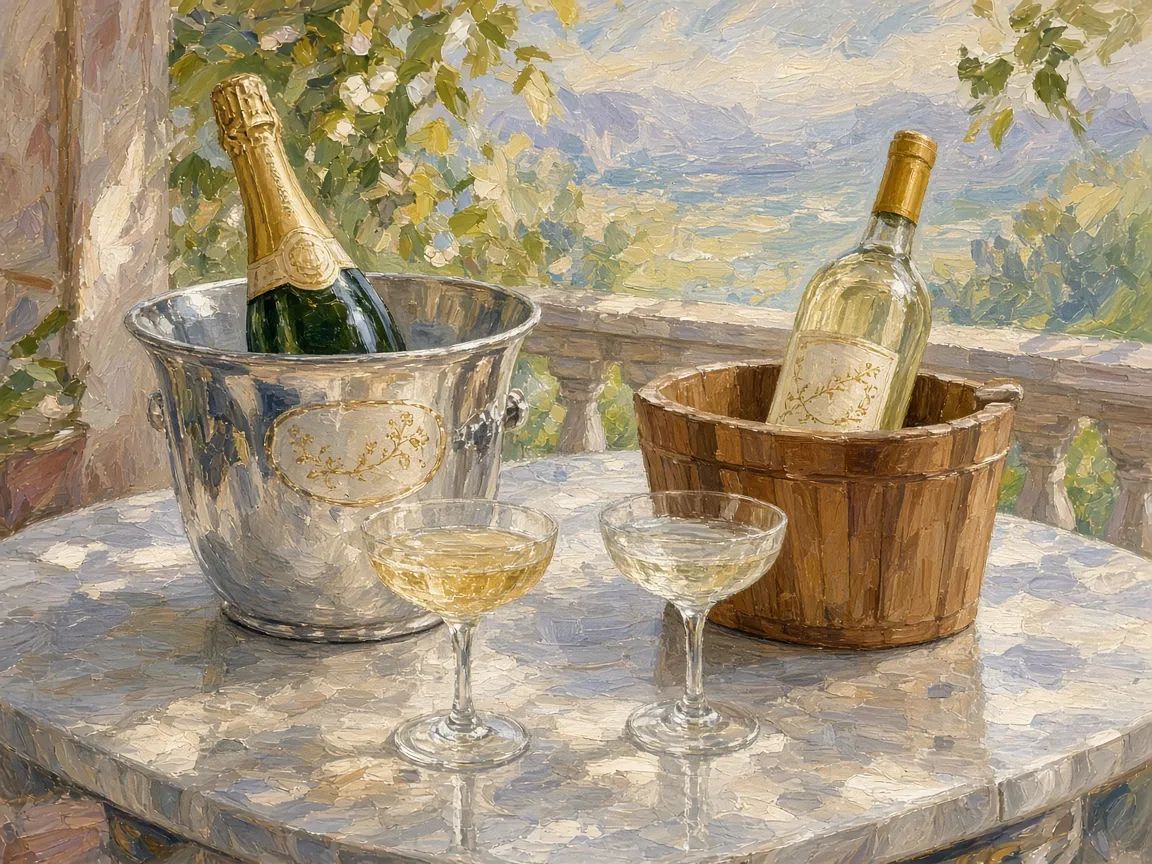
- Champagne bucket: essential with sparkling wines and at celebrations, with ice and water up to the bottle’s neck.
And put some music on: a good, chilled white with bossa nova on the terrace is hard to beat.